
We set ourselves an ambitious programme of fostering Science Learning (formal and informal) through innovative Artificial Intelligence developed for Citizen Science.
We bring AI research on Image Recognition, Data Analytics and Natural Language Generation and a decade’s experience of Citizen Science practice to bear on research problems, primarily focused on challenging topical issues such as Biodiversity monitoring and Actionable citizen science.
The group spans the Knowledge Media Institute and School of Environment, Earth and Ecosystem Sciences, and is supported by grants from EPSRC, NERC, H2020 and National Geographic.
As artificial intelligence (AI) becomes a routine study companion, drafting essays, solving problems, and offering instant explanations, researchers are asking a new question: what happens to our own ability to think? Several recent studies suggest that frequent use of generative AI can weaken memory, dilute reasoning skills, and distance students from the process of learning itself.
The Citizen Science and Artificial Intelligence (CSAI) group, spanning KMi and EEES, is tackling this challenge with a refreshingly hands-on approach. Since 2017, we have explored how technology can support learning not by replacing experience, but by deepening it.
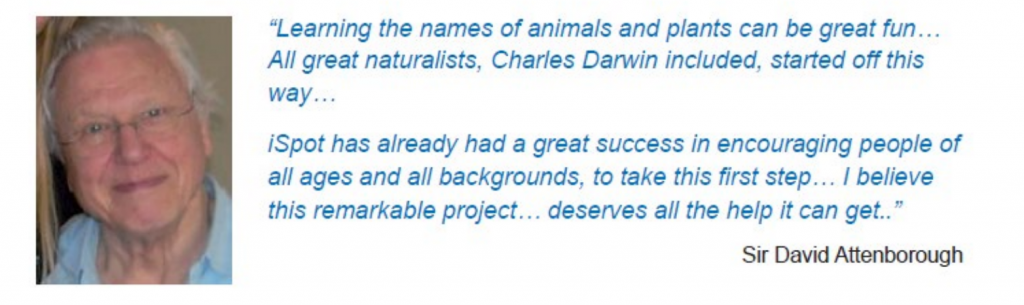
Our flagship platform, iSpot, invites anyone to upload photos of wildlife and get help identifying species through a blend of AI suggestions and community expertise. The platform has reached global audiences and been featured on BBC’s Springwatch and Wild Isles. At the OU, students use iSpot for real‑world assessments; tasks grounded in observation, not something a chatbot can easily complete. Citizen science methodologies in iSpot not only develop students’ field skills (a challenge for online learning courses) but also give them an experience of being part of a community recording real biodiversity data that is being used to make real world decisions.
We are also experimenting with digital haptic tools that let users “feel” natural textures at different scales, such as microscopic images of leaf stomata (the openings for exchange of gases during photosynthesis), through a screen. And in schools, particularly in communities with limited access to green spaces, we help transform small outdoor areas into research sites. Children plant wildflowers, track pollinators, sketch what they see, and document their findings using tablets, turning local biodiversity into a living classroom, and making learning personal and curiosity-driven.
Our work comes at a critical moment. The UK remains one of the most nature‑depleted countries, and only a minority of children spend regular time outdoors. By reframing citizen science as a cycle of noticing, acting, and caring, CSAI is helping reconnect people, especially young learners, with the environment around them.
Their message is simple but timely: even in an AI‑driven world, meaningful learning often begins by stepping outside and paying attention.